Question 7:
Diagram 6 shows the ray diagrams for lenses, J and K.
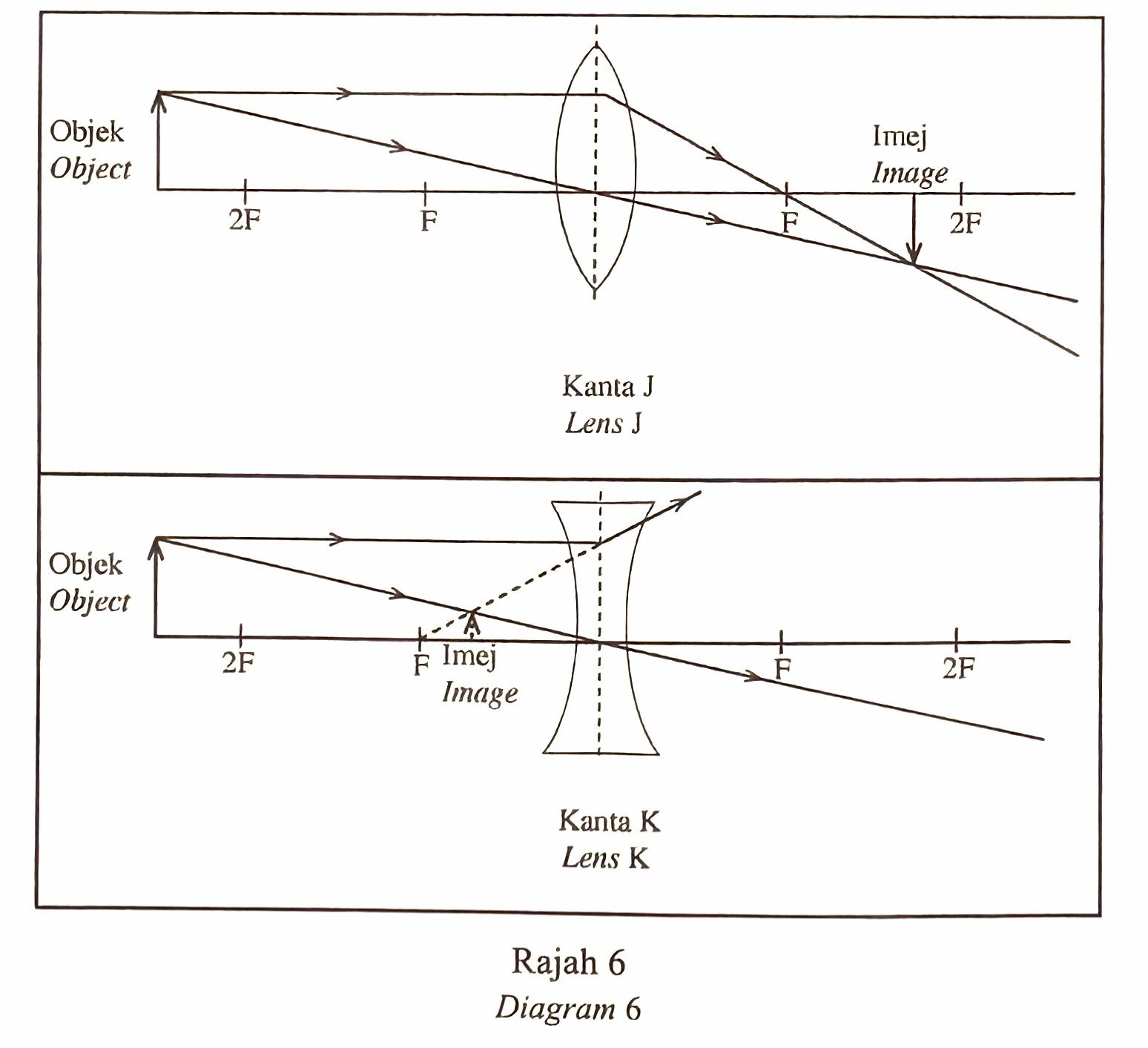 (a) State the type of lens J. [1 mark]
(b) State two examples of optical instruments that apply lens J so that objects can be seen more clearly.b [2 marks]
(c) Based on Diagram 6, compare and contrast the characteristics of image for lenses J and K. [2 marks]
(d) A student helps his teacher to set up LCD projector in the laboratory. He adjusts the lens of the LCD projector.
State a reason of the student’s action.
[1 mark]
Answer:
(a) Convex lens.
(b) – Magnifying glass
– Microscope
(c)
Similarity:
– Both lenses produce diminished images.
Difference:
– Lens J forms a real and inverted image whereas lens K forms a virtual and upright image.
(d) – To obtain a clear and sharp image on the screen.
– To enlarge the image on the screen.
Diagram 6 shows the ray diagrams for lenses, J and K.
(a) State the type of lens J. [1 mark](b) State two examples of optical instruments that apply lens J so that objects can be seen more clearly.b [2 marks]
(c) Based on Diagram 6, compare and contrast the characteristics of image for lenses J and K. [2 marks]
(d) A student helps his teacher to set up LCD projector in the laboratory. He adjusts the lens of the LCD projector.
State a reason of the student’s action.
[1 mark]
Answer:
(a) Convex lens.
(b) – Magnifying glass
– Microscope
(c)
Similarity:
– Both lenses produce diminished images.
Difference:
– Lens J forms a real and inverted image whereas lens K forms a virtual and upright image.
(d) – To obtain a clear and sharp image on the screen.
– To enlarge the image on the screen.
Question 8:
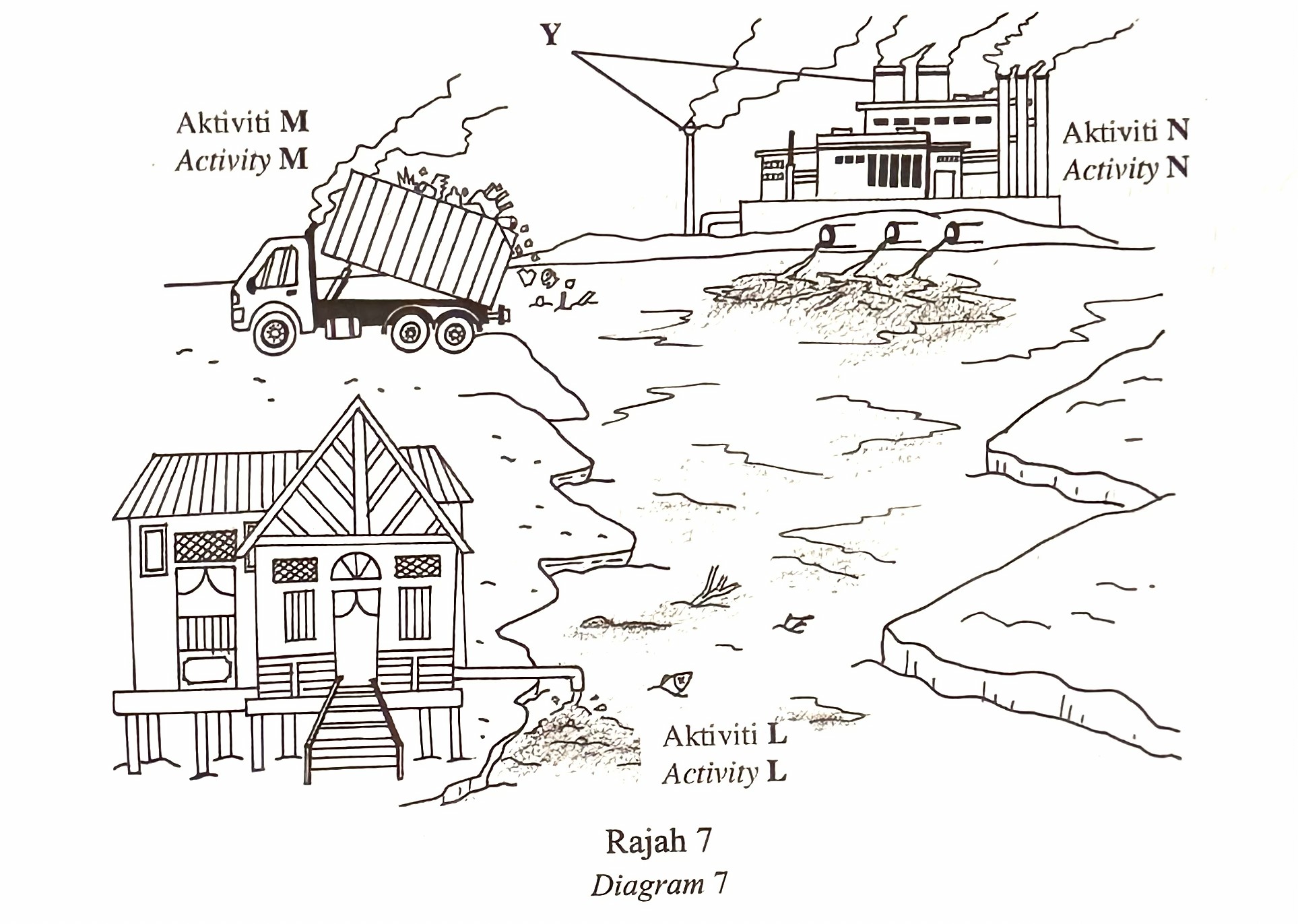
Diagram 7 shows the environmental pollution caused by human activities since three years ago.
 (a) State one type of environmental pollution. [1 mark]
(b) Activity L was identified as one of the sources of pollution in the area.
Suggest two ways to reduce pollution from activity L.
[2 marks]
(c) Based on Diagram 7, compare and contrast activities M and N in the pollution of environment. [2 marks]
(d) Manufacturer of activity N would like to install electrostatic filters at part Y.
State how the action improve the air quality.
[1 mark]
Answer:
(a) Water pollution.
(b)
– Do not discharge domestic sewage directly into the river.
– Use biodegradable detergents.
– Treat domestic sewage before discharging it into the river.
– Build a proper sewage system.
(Any two answer)
(c)
Similarity:
– Both activities M and N cause environmental pollution.
Difference:
– Activity M causes water pollution whereas activity N causes air pollution.
Explanation:
– Both activities release pollutants that affect the environment and living organisms.
– Activity M involves waste that pollutes water sources, while activity N involves the release of smoke and gases from factories into the air.
(d) Electrostatic filters remove dust and smoke particles from air released by factories, thus reducing air pollution.
Diagram 7 shows the environmental pollution caused by human activities since three years ago.
(a) State one type of environmental pollution. [1 mark](b) Activity L was identified as one of the sources of pollution in the area.
Suggest two ways to reduce pollution from activity L.
[2 marks]
(c) Based on Diagram 7, compare and contrast activities M and N in the pollution of environment. [2 marks]
(d) Manufacturer of activity N would like to install electrostatic filters at part Y.
State how the action improve the air quality.
[1 mark]
Answer:
(a) Water pollution.
(b)
– Do not discharge domestic sewage directly into the river.
– Use biodegradable detergents.
– Treat domestic sewage before discharging it into the river.
– Build a proper sewage system.
(Any two answer)
(c)
Similarity:
– Both activities M and N cause environmental pollution.
Difference:
– Activity M causes water pollution whereas activity N causes air pollution.
Explanation:
– Both activities release pollutants that affect the environment and living organisms.
– Activity M involves waste that pollutes water sources, while activity N involves the release of smoke and gases from factories into the air.
(d) Electrostatic filters remove dust and smoke particles from air released by factories, thus reducing air pollution.