Question 11:
There are two water taps on two different walls of the fence. One of the water taps on the wall of the fence is broken, causing water to drip out continuously.
Diagram 10 shows the condition of the wall of the fence after a month.

Based on the situation in Diagram 10, plan an experiment in the laboratory by using two sterile Petri dish containing moist nutrient agar, Bacillus sp. culture solution, wire loop, cellophane tape and oven to study one factor that affects the growth of microorganisms.
The experiment planning should include the following criteria:
(a) Problem statement [1 mark]
(b) Hypothesis [1 mark]
(c)(i) Manipulated variable [1 mark]
(ii) Ways to control the manipulated variable [1 mark]
(d)(i) Responding variable [1 mark]
(ii) Ways to control the responding variable [1 mark]
(e) Tabulation of data [2 marks]
(f) Two precautionary steps when carrying out the experiment [2 marks]
Answer:
(a) What is the effect of moisture on the growth of Bacillus sp.?
(b) Low moisture inhibits the growth of Bacillus sp.
(c)(i) Moisture of the nutrient agar.
(c)(ii) One Petri dish is heated in the oven so that the agar becomes dry while the other is kept moist.
(d)(i) Number of Bacillus sp. colonies.
(d)(ii) Count and record the number of bacterial colonies after three days.
(e)

(f)
1. Wash hands with soap before and after the experiment.
2. Sterilise all apparatus and waste materials after the experiment
There are two water taps on two different walls of the fence. One of the water taps on the wall of the fence is broken, causing water to drip out continuously.
Diagram 10 shows the condition of the wall of the fence after a month.
Based on the situation in Diagram 10, plan an experiment in the laboratory by using two sterile Petri dish containing moist nutrient agar, Bacillus sp. culture solution, wire loop, cellophane tape and oven to study one factor that affects the growth of microorganisms.
The experiment planning should include the following criteria:
(a) Problem statement [1 mark]
(b) Hypothesis [1 mark]
(c)(i) Manipulated variable [1 mark]
(ii) Ways to control the manipulated variable [1 mark]
(d)(i) Responding variable [1 mark]
(ii) Ways to control the responding variable [1 mark]
(e) Tabulation of data [2 marks]
(f) Two precautionary steps when carrying out the experiment [2 marks]
Answer:
(a) What is the effect of moisture on the growth of Bacillus sp.?
(b) Low moisture inhibits the growth of Bacillus sp.
(c)(i) Moisture of the nutrient agar.
(c)(ii) One Petri dish is heated in the oven so that the agar becomes dry while the other is kept moist.
(d)(i) Number of Bacillus sp. colonies.
(d)(ii) Count and record the number of bacterial colonies after three days.
(e)
(f)
1. Wash hands with soap before and after the experiment.
2. Sterilise all apparatus and waste materials after the experiment
Question 12:
Pancreas in human endocrine system ensures the glucose in blood is controlled at the normal level, which is from 3.9 mmol/l to 5.6 mmol/l.
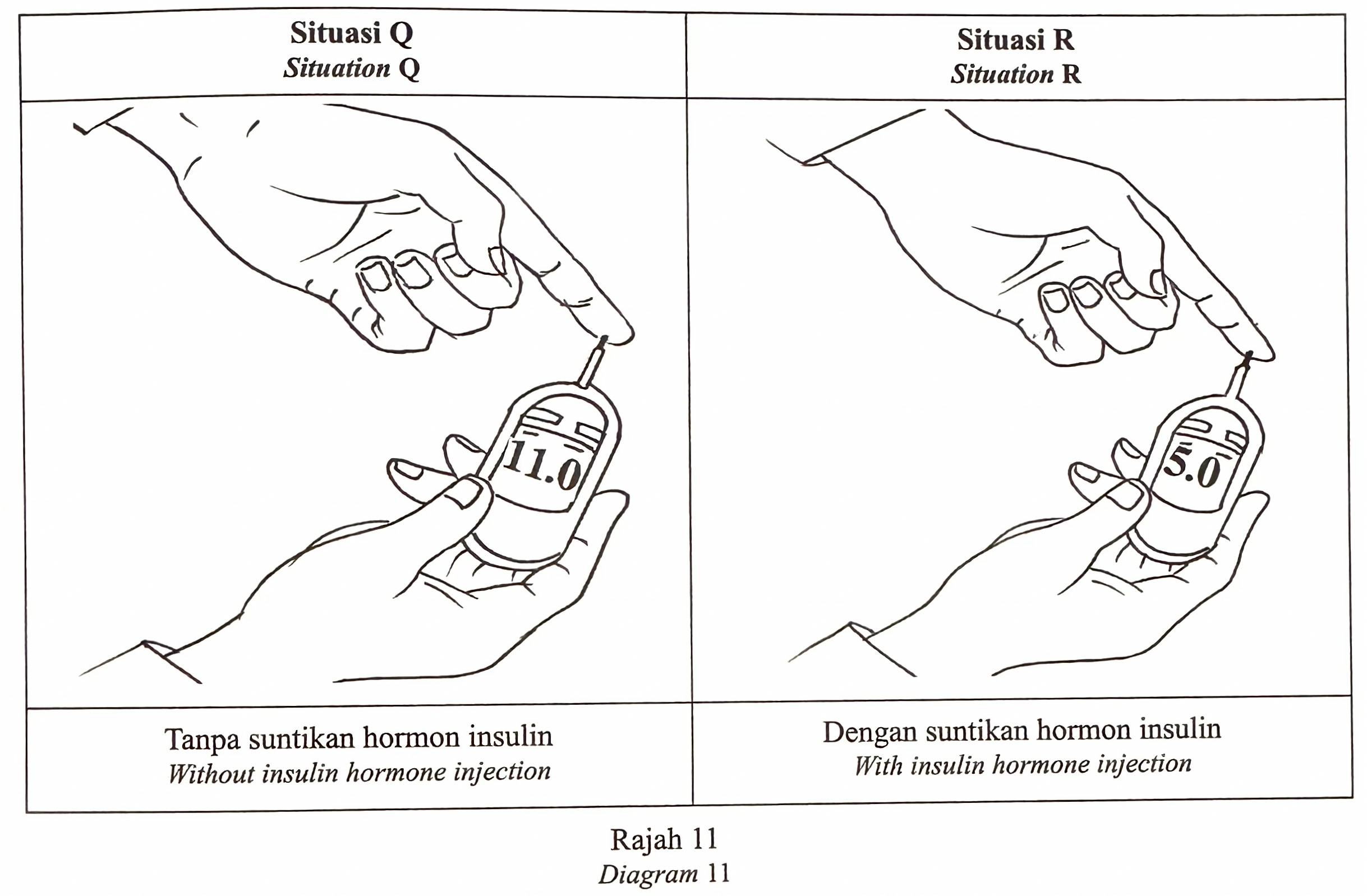
Diagram 11 shows the readings of glucose level in blood (mmol/l) of the same individual in situations, Q and R.
 (a) State two endrocrine glands in human body other than pancreas. [2 marks]
(b) Based on Diagram 11, state the disease suffered by the individual. Give a reason for your answer. [2 marks]
(c)(i) Explain how insulin hormone controls the glucose level in the blood [2 marks]
(ii) Explain the effects of excessive insulin hormone. [2 marks]
(d) The Ministry of Health in Malaysia prohibited the sale of carbonated drink in school premises. Justify the prohibition from the aspect of sugar content of the drink. [4 marks]
Answer:
(a) – Pituitary gland
– Thyroid gland
(b) Disease:
– Diabetes mellitus
Reason:
– The individual’s blood glucose level is high without insulin injection (11.0 mmol/l) and decreases to the normal level after insulin injection (5.0 mmol/l).
(c)(i) – Insulin stimulates body cells to absorb glucose from the blood.
– Insulin also converts excess glucose into glycogen to be stored in the liver and muscles.
(c)(ii) – Excessive insulin hormone causes blood glucose level to drop too low (hypoglycaemia).
– The individual may become weak, dizzy or faint.
(d) – Carbonated drinks contain high sugar content.
– Excessive sugar intake increases blood glucose level.
– This can cause obesity and diabetes mellitus.
– The prohibition can help students practise a healthier diet.
Pancreas in human endocrine system ensures the glucose in blood is controlled at the normal level, which is from 3.9 mmol/l to 5.6 mmol/l.
Diagram 11 shows the readings of glucose level in blood (mmol/l) of the same individual in situations, Q and R.
(a) State two endrocrine glands in human body other than pancreas. [2 marks](b) Based on Diagram 11, state the disease suffered by the individual. Give a reason for your answer. [2 marks]
(c)(i) Explain how insulin hormone controls the glucose level in the blood [2 marks]
(ii) Explain the effects of excessive insulin hormone. [2 marks]
(d) The Ministry of Health in Malaysia prohibited the sale of carbonated drink in school premises. Justify the prohibition from the aspect of sugar content of the drink. [4 marks]
Answer:
(a) – Pituitary gland
– Thyroid gland
(b) Disease:
– Diabetes mellitus
Reason:
– The individual’s blood glucose level is high without insulin injection (11.0 mmol/l) and decreases to the normal level after insulin injection (5.0 mmol/l).
(c)(i) – Insulin stimulates body cells to absorb glucose from the blood.
– Insulin also converts excess glucose into glycogen to be stored in the liver and muscles.
(c)(ii) – Excessive insulin hormone causes blood glucose level to drop too low (hypoglycaemia).
– The individual may become weak, dizzy or faint.
(d) – Carbonated drinks contain high sugar content.
– Excessive sugar intake increases blood glucose level.
– This can cause obesity and diabetes mellitus.
– The prohibition can help students practise a healthier diet.